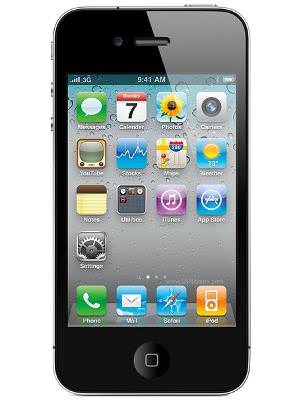
Apple iPhone 4
Released: June 24, 2010
The Apple iPhone 4: A Design Icon Revisited The Apple iPhone 4 stands as a landmark device in smartphone history, defined by its revolutionary industrial design and premium build. Targeted squarely at users who value aesthetics and a compact, sturdy handset, this model introduced the now-iconic stainless steel frame and glass sandwich construction. Though discontinued and running on legacy hardware, the iPhone 4 offers a unique value proposition for collectors, nostalgic users, or those seeking a basic secondary device with a timeless look. 📱 Revolutionary Design & Display The iPhone 4’s most striking feature is its masterful craftsmanship. The combination of a stainless steel frame with glass front and back panels delivers a premium, solid feel rarely matched by modern plastics. Its 3.5-inch IPS LCD display (960 x 640 pixels) packs a sharp 330 PPI density, a retina-class screen that was groundbreaking for its time, offering excellent clarity for text and images. The Corning Gorilla Glass with oleophobic coating helps resist scratches and smudges. 📸 Camera & Performance: The Basics Refined Equipped with a 5 MP rear camera (f/2.8) featuring autofocus and an LED flash, the iPhone 4 captures decent daylight shots and supports 720p video recording. The front VGA camera enables basic video calling over Wi-Fi. Under the hood, the Apple A4 chipset with a 1.0 GHz Cortex-A8 CPU and 512 MB RAM runs iOS 4 (upgradable to iOS 7.1.2), delivering a smooth interface for its era but limited for modern apps. Storage options include 8GB, 16GB, and 32GB, with no expansion slot. 🔋 Battery & Connectivity The device houses a 1420 mAh Li-Po battery, rated for up to 7 hours of talk time on 3G and 300 hours of standby. Connectivity is basic but functional for its time, including Wi-Fi 802.11 b/g/n, Bluetooth 2.1, and GPS with A-GPS. Notably, the iPhone 4 lacks 4G LTE, NFC, a 3.5mm headphone jack, and a radio. Who is this for? / Should you buy it? The Apple iPhone 4 is best suited for collectors, vintage tech enthusiasts, or as an ultra-basic feature phone for calls, texts, and music playback. It offers solid build quality and a compact form factor that many users miss today. However, for general use in 2024, its hardware is severely outdated—the 3G-only connectivity, limited RAM, and unsupported iOS make it impractical for modern apps and browsing. It is a piece of history, not a daily driver.
Read full description ↓Reasons to Buy
- Premium stainless steel & glass construction with iconic design.
- Sharp 3.5-inch Retina display with high 330 PPI density.
- Compact and lightweight form factor (137g) for easy one-handed use.
- Reliable build quality with Corning Gorilla Glass protection.
- Viable as a basic secondary phone for calls and music.
Reasons to Avoid
- Limited to 3G HSPA connectivity; no 4G or 5G support.
- 512MB RAM and aging Apple A4 chipset struggle with modern apps.
- Non-removable 1420 mAh battery offers modest endurance.
- No expandable storage, headphone jack, or NFC.
- Discontinued and no longer receives software updates.
Full Specifications
Network
Launch
Body
Display
Platform
Memory
Main Camera
Selfie Camera
Sound
Connectivity
Features
Battery
Misc
Tests
Apple iPhone 4 Review
The Apple iPhone 4: A Design Icon Revisited
The Apple iPhone 4 stands as a landmark device in smartphone history, defined by its revolutionary industrial design and premium build. Targeted squarely at users who value aesthetics and a compact, sturdy handset, this model introduced the now-iconic stainless steel frame and glass sandwich construction. Though discontinued and running on legacy hardware, the iPhone 4 offers a unique value proposition for collectors, nostalgic users, or those seeking a basic secondary device with a timeless look.
📱 Revolutionary Design & Display
The iPhone 4’s most striking feature is its masterful craftsmanship. The combination of a stainless steel frame with glass front and back panels delivers a premium, solid feel rarely matched by modern plastics. Its 3.5-inch IPS LCD display (960 x 640 pixels) packs a sharp 330 PPI density, a retina-class screen that was groundbreaking for its time, offering excellent clarity for text and images. The Corning Gorilla Glass with oleophobic coating helps resist scratches and smudges.
📸 Camera & Performance: The Basics Refined
Equipped with a 5 MP rear camera (f/2.8) featuring autofocus and an LED flash, the iPhone 4 captures decent daylight shots and supports 720p video recording. The front VGA camera enables basic video calling over Wi-Fi. Under the hood, the Apple A4 chipset with a 1.0 GHz Cortex-A8 CPU and 512 MB RAM runs iOS 4 (upgradable to iOS 7.1.2), delivering a smooth interface for its era but limited for modern apps. Storage options include 8GB, 16GB, and 32GB, with no expansion slot.
🔋 Battery & Connectivity
The device houses a 1420 mAh Li-Po battery, rated for up to 7 hours of talk time on 3G and 300 hours of standby. Connectivity is basic but functional for its time, including Wi-Fi 802.11 b/g/n, Bluetooth 2.1, and GPS with A-GPS. Notably, the iPhone 4 lacks 4G LTE, NFC, a 3.5mm headphone jack, and a radio.
Who is this for? / Should you buy it?
The Apple iPhone 4 is best suited for collectors, vintage tech enthusiasts, or as an ultra-basic feature phone for calls, texts, and music playback. It offers solid build quality and a compact form factor that many users miss today. However, for general use in 2024, its hardware is severely outdated—the 3G-only connectivity, limited RAM, and unsupported iOS make it impractical for modern apps and browsing. It is a piece of history, not a daily driver.
Frequently Asked Questions
No. The iPhone 4 only supports GSM/HSPA networks (3G). It does not support 4G LTE or 5G networks.
The iPhone 4 is powered by the Apple A4 (45 nm) chipset with a 1.0 GHz Cortex-A8 CPU and a PowerVR SGX535 GPU.
The iPhone 4 has a non-removable Li-Po 1420 mAh battery. It provides up to 7 hours of talk time on 3G and up to 300 hours of standby time on 3G.
The main camera is a 5 MP sensor with f/2.8 aperture, autofocus, LED flash, and HDR. It records 720p@30fps video. The front camera is a VGA camera that records 480p@30fps and supports video calling over Wi-Fi only.
The iPhone 4 features a 3.5-inch IPS LCD display with a resolution of 640x960 pixels (3:2 ratio), a pixel density of 330 ppi, and Corning Gorilla Glass with oleophobic coating. It has a screen-to-body ratio of approximately 54%.
The iPhone 4 is available in three storage variants: 8GB, 16GB, and 32GB, all with 512MB of RAM. There is no card slot for expandable storage.
No, the iPhone 4 does not have any IP rating for water or dust resistance. Its build consists of a glass front, glass back, and stainless steel frame.
Compare with Top Competitors
See how the Apple iPhone 4 stacks up against similar alternatives in Bangladesh.
iPhone 4
iPhone 17
৳1,79,999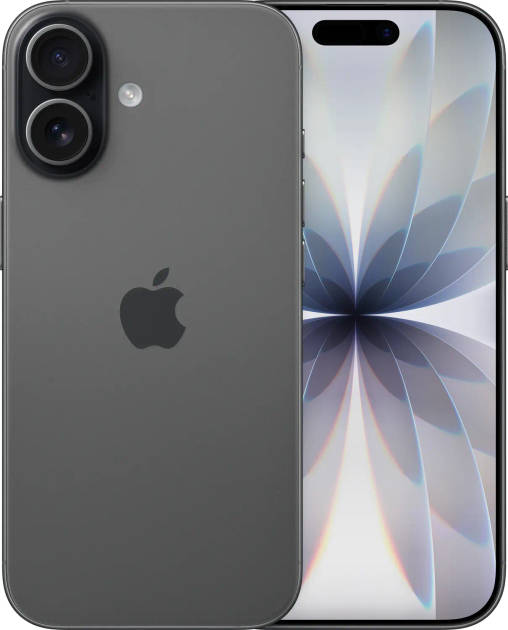
iPhone 4
iPhone 17 Pro
৳2,29,998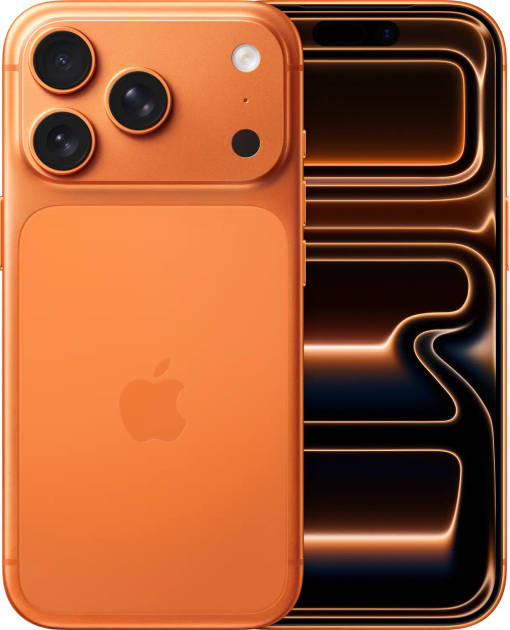
iPhone 4
iPhone 17 Pro Max
৳2,49,999
iPhone 4
iPhone 16 Pro Max
৳2,49,999